
Checking Criminal History in Toledo
No single Toledo search covers police narratives, jail bookings, and filed cases. Start with the event's custodian. The village clerk is only a written municipal fallback because no current direct Toledo Police record contact was verified. Sheriff and Circuit Clerk have confirmed phone and counter routes.
- Identify Toledo Police or another investigating agency.
- Use Village Clerk P.O. Box 443 as the verified written municipal fallback.
- Call Sheriff at 217-849-2571 for custody or booking.
- Call the Circuit Clerk at 217-849-3601 for a filed case.
- Use ISP CHIRP only for public Illinois conviction information.
Three Toledo Record Keepers
A Toledo arrest may create three nearby records. Toledo Police holds the narrative and initial arrest facts. Sheriff at 166 Courthouse Square holds booking and custody. Circuit Clerk in Room 107 at 1 Courthouse Square holds charges, docket events, orders, disposition, sentence, and finance entries.
Ask each office only for its layer. Detention does not prove a Cumberland prosecution because the 30-bed jail may house people for other counties. A filed case does not automatically include the full police narrative.
Toledo Police Department Records
Official Illinois sources confirm a Toledo Police Department, but research found no standalone official site, public report form, blotter, portal, app, street address, or direct record number. Do not invent one. The ICC directory gives Village Clerk, P.O. Box 443, Toledo, IL 62468-0443. An ICC filing lists toledotreas@mchsi.com. Treat both only as municipal written-request fallbacks.
For custody use the Sheriff. For a filed case use the clerk. If a village response identifies a current police custodian, follow that official direction.
Courthouse Addresses Differ
The courthouse is at 1 Courthouse Square. Sheriff and jail are at 166 Courthouse Square. The similar place names make misrouting easy. Mail for Circuit Clerk goes to P.O. Box 145, while Sheriff mail goes to P.O. Box 56.
The official county government homepage provides the Toledo-based office gateway.
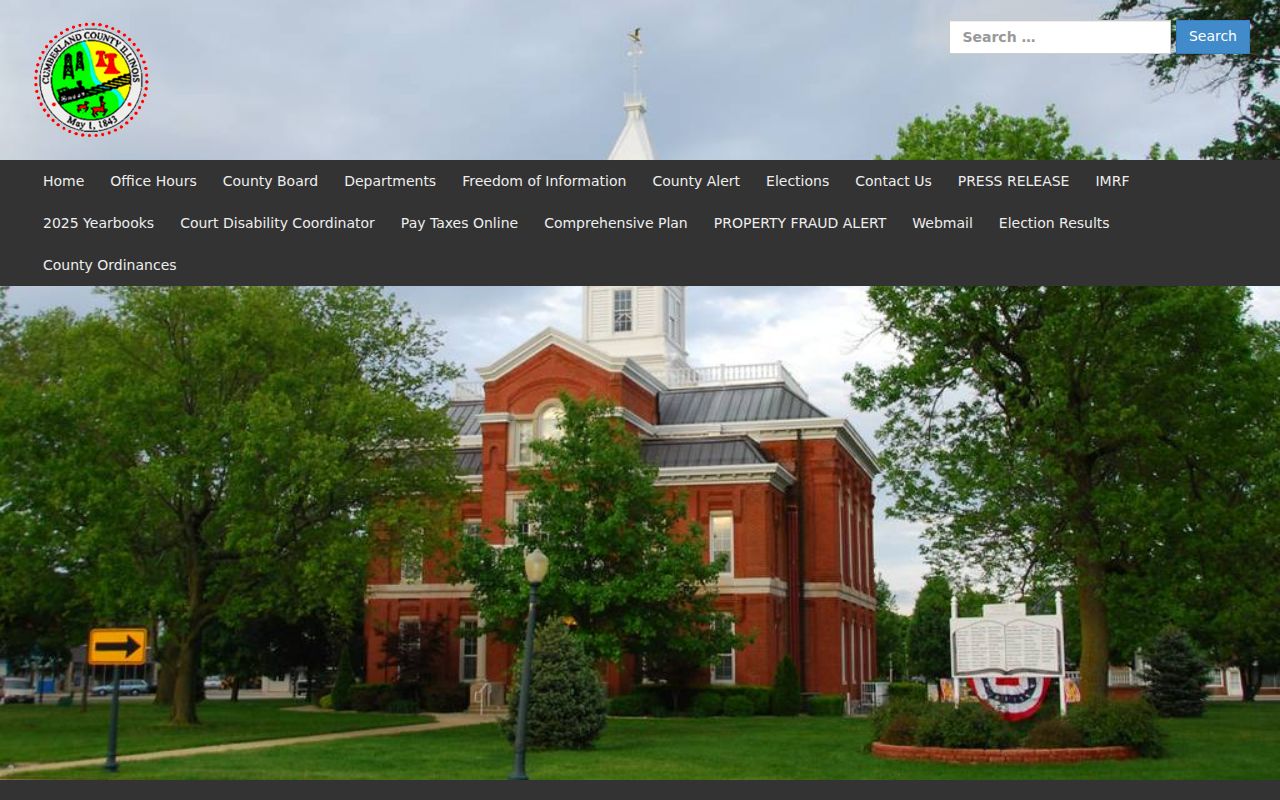
The county page helps locate the right department, but department custody still controls the record.
Toledo Arrests and Bookings
Call Cumberland Sheriff at 217-849-2571 to ask about current custody. No official online roster or booking log exists. A written Sheriff FOIA request can seek booking detail. Toledo Police's narrative remains a separate city record.
A new booking can appear before prosecutors file a case. An arrest charge may change. The county arrest lookup covers county custody while preserving that difference.
Room 107 Criminal Help
Circuit Clerk Rhonda Wilson's counter is Room 107 on the courthouse first floor. The office answers 217-849-3601 and circuitclerk@cumberlandco.org, weekdays 8:00 a.m. to 4:00 p.m. Mail goes to P.O. Box 145, Toledo, IL 62468-0145; fax is 217-849-2655.
Give full name, approximate filing or arrest date, case type, and case number if known. Ask if the file is public, on site, electronic, or archived and confirm copy fees.
Municipal Court Records in Toledo
Toledo has no municipal court. The unified Cumberland County Circuit Court hears ordinance, traffic, misdemeanor, and felony matters. The Illinois court process explains that unified path.
The official process image reinforces why a Toledo citation goes to Circuit Court.
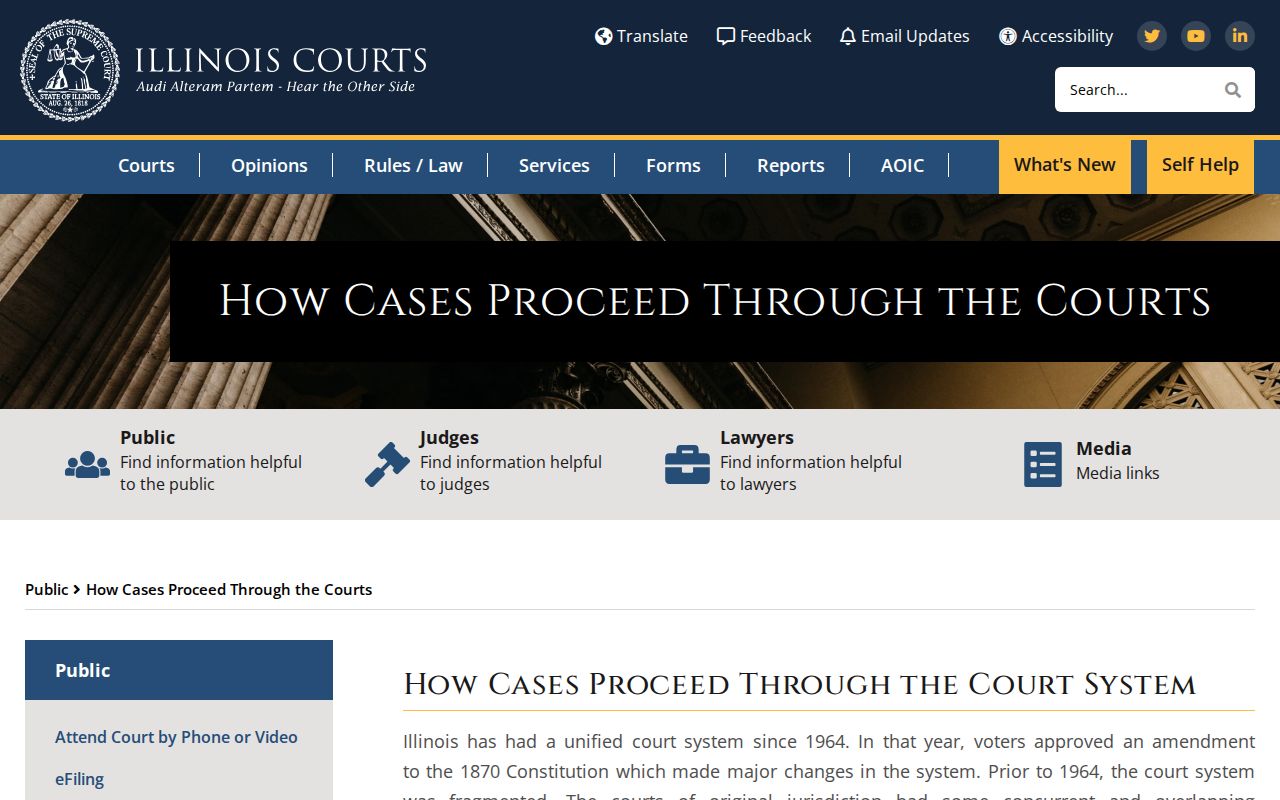
There is no city docket to search apart from the county Circuit Court file.
| Court Name | Cumberland County Circuit Court |
|---|---|
| Case Types Heard | Ordinance, traffic, misdemeanor, and felony |
| Case Lookup Channel | Room 107, phone, email, fax, or mail |
| What the Docket Shows | Charges, events, orders, outcome, sentence, and costs |
| Copies & Fees | Confirm current rates with the clerk |
Toledo Judici Is Not Search
The clerk offers Judici and CourtMoney as payment routes, but the live Cumberland Judici page says the county is unavailable for case search. CourtMoney at 1-877-222-4668 uses form 146402 and needs name, DOB, case or ticket number, and amount. Its representatives cannot see the balance.
Ask the clerk for the balance first. A payment link is not proof that Toledo cases are searchable online.
Where Toledo Records Go
Police creates the report, Sheriff creates booking if detained, and the court creates a file after charging. Qualifying fingerprint arrest cycles and court outcomes later flow to ISP.
Record flow: Toledo Police › Cumberland County Circuit Court › Illinois State Police Bureau of Identification
Use local channels for recent facts, the clerk for the filed result, and CHIRP for later public conviction data.
Toledo Counter Access
Free parking surrounds the courthouse square. Mass Ride Transit at 217-923-4079 serves the area. A first-floor public e-filing computer supports filing but is not a promised case-search terminal. The courthouse also has a law library, lactation rooms, and digital recording.
These amenities make counter access easier. Call ahead to confirm that the desired file is public and available before travel.
Toledo County Seat Since 1857
Toledo had 1,161 residents in the 2020 Census. The county seat moved from Greenup amid dispute in 1857, and Toledo incorporated as a village that year. It lies in central Cumberland County on Illinois 121, about 24 miles northeast of Effingham and 17 miles southeast of Mattoon.
Rail and roads shaped Toledo, while drainage runs toward Cottonwood Creek and the Embarras River. The public water system dates to 1926. Local context helps place historic files, though Cumberland's 1885 fire caused total county record loss.
Toledo Arrest Record Boundaries
Illinois FOIA makes specified chronological arrest facts public as soon as practical and no later than 72 hours after arrest. Those facts include identifying name, age, address and photograph when available, charges, arrest time and place, agency, and custody receipt, transfer, or discharge dates and times. The rule does not make the whole Toledo investigative file public. Victim or juvenile information, confidential sources, active investigative material, personal identifiers, and security details can be withheld.
The jail's booking process creates more than the short public arrest summary. Staff verify identity and legal authority, perform intake searches, take fingerprints and photographs, inventory property, obtain signatures on the property receipt, and conduct medical and mental-health screens. These records document custody. They do not prove guilt, and the county does not expose them through a public inmate profile or mugshot gallery.
If a Toledo arrest was dismissed, compare the court disposition with Illinois expungement and sealing rules. Public CHIRP conviction information may omit the arrest while the local police or court record still exists. A person reviewing their own full Illinois record can use fingerprint Access and Review and its challenge process. These state routes stay at supporting depth because Toledo Police, Sheriff, and Circuit Clerk remain the direct sources for the local event.
Toledo Cases After Filing
Once prosecutors file, the Circuit Clerk record can show the charging instrument, first appearance, counsel, arraignment, plea, motions, hearings, orders, trial or plea result, sentence, appeal notice, failure to appear, and warrant entries. Arrest charges may not match filed charges. Court supervision is not a conviction, and dismissal or acquittal is not guilt. Read the disposition field and related order.
Illinois ended cash bail on September 18, 2023. New Toledo cases use release conditions and detention decisions under the current pretrial system. Older dockets may still use cash, surety, or recognizance bond terms. Do not project an old “bond amount” onto a current arrest or advise someone to pay a bond based only on an older entry.
For a courthouse visit, ask whether the file is public and available. The clerk's public e-filing computer is for filing, not a promise of open name search. Free square parking and Mass Ride Transit ease access. The Disability Coordinator uses the clerk contact. These practical details matter when remote access does not show the full Toledo case.
Toledo Crime Data Caution
The 2020 Census population supplies the verified Toledo count. The research did not confirm a complete current Toledo Police crime row from ISP or FBI sources. An absent result is not zero crime. Any published total should name the agency, year, offense definition, and reporting completeness.
Geography can identify the likely agency but not prove it. Toledo is crossed by Illinois 121 and linked by rail and county roads. Toledo Police, Cumberland Sheriff, or ISP may create the first record based on jurisdiction and response. Use the agency named on the citation or report before sending a request.
Toledo became the county records center in the nineteenth century, yet the November 5, 1885 courthouse fire caused total loss of county records. That date is a firm archival limit, not evidence about any one event. Ask the clerk whether later files are onsite, electronic, or archived before assuming a missing web result means no record.
Public Access Rules in Toledo
Illinois FOIA governs village and Sheriff records, while court rules govern the Circuit Court file. FOIA does not require creation of a new report. Specified arrest facts have a 72-hour outside limit. Investigative, victim, juvenile, source, identifier, and security information may be withheld or redacted.
Key Statutes:
Illinois Freedom of Information Act sets request and exemption rules.
5 ILCS 140/2.15 identifies public arrest facts.
Illinois Remote Access Policy limits web court access.